
Updated: 29 Oct 2026
Phone Order Taker for Restaurants and Pizzerias: The Phone Rings, the Order Is Already in the Kitchen
A phone order taker is a digital assistant that answers the place's phone in Hebrew and takes the order by your menu: sizes, toppings, half-and-half, doneness. It prices the order from the menu, asks pickup or delivery and how the customer pays, and sends the order to a live orders screen in the kitchen, with a sound and a ticket to print. You photograph the menu once and every dish comes in. Azorly connects to the place's existing number and costs from ₪199 a month before VAT.
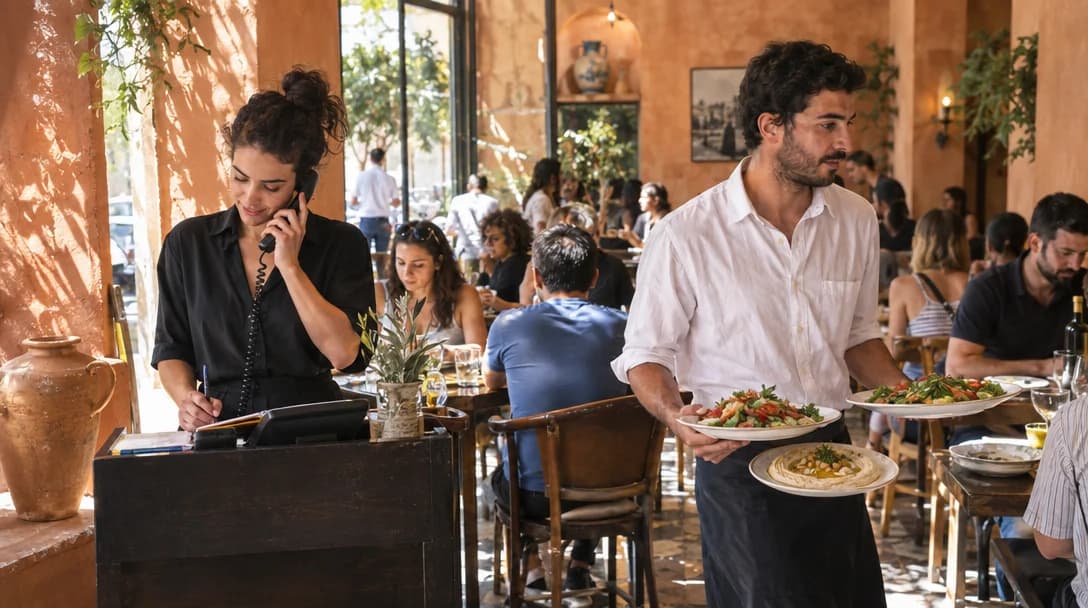
Friday, 19:30, a neighborhood pizzeria. Two people in the kitchen, one at the register, and the phone rings every minute. Whoever answers leaves the dough or the customer at the counter, writes "family size, half olives half mushrooms" on a note, and hopes they got it right. A missed call is an order that went to an app, or to another place. Israel has more than 11,000 restaurants and cafés (by a 2017 CofaceBdi review), and in each of them the phone rings exactly when everyone is busy. A phone order taker answers every call at once, writes it down exactly, and keeps the team in the kitchen.
Why a phone order is worth more than an app order
Delivery apps bring customers but take a cut of every order. According to Globes and ynet, Wolt's commission from restaurants stood at 27% of each order, and a 2020 bill said delivery commissions "reach up to a third of the order value". An estimate published in 2026 puts it at 20%–30% before VAT plus an operating fee of up to NIS 5.9 per order. A regular who calls the place directly leaves the whole amount with you. What they need is someone who answers, fast, and takes the order right.
| Kind of place | What it asks | Example |
|---|---|---|
| Pizzeria | Size, toppings, and "whole pie or half?" only when it isn't clear. Crust or sauce only if the menu offers a choice | "Family size, olives on one half, mushrooms on the other, and a cola" |
| Burgers | Doneness (required, first), weight if there is a choice, extras if asked, and one short question about making it a meal | "300 grams medium with a fried egg, as a meal with fries" |
| Shawarma and falafel | Pita, laffa or plate, "all the salads?", and which sauces | "Turkey shawarma in a laffa, everything but onion, tahini and amba" |
| Sushi | Which roll, regular or inside-out when there is a choice, tempura if offered | "Two salmon avocado inside-out and a tempura roll" |
| Grill | Doneness for steaks and a side when the dish includes a choice | "Entrecôte medium well with fries" |
| Café and bakery | Size, milk only when they want another kind, sliced or whole for bread | "A large latte with oat milk and a butter croissant" |
One call, from hello to the kitchen ticket
- 1
A short greeting
"Pizza Napoli, hello. What would you like to order?" No speeches and no menu read out.
- 2
The dishes
One question at a time, by kind of place. A dish sold out today isn't offered, and if asked for, it says so and offers the closest one.
- 3
Pickup or delivery
For delivery: street, number, city, floor and apartment. Minimum order and delivery fee by your settings.
- 4
Recap and total
One sentence with what was ordered and the total the system worked out from the menu: "So a half-and-half family size and a cola, seventy-seven shekels with delivery."
- 5
Payment
Cash, card at the counter or to the courier, or card over the phone, as you set.
- 6
Order number and time
"Your order is in, number 12. Delivery in about 40 minutes." And the order is already on the screen in the kitchen.
The menu comes in from a photo
At sign-up you choose "pizzeria or restaurant" and photograph the menu, page by page. The system reads the categories, dishes, sizes, prices and toppings, and adds choices typical for the kind of place even when the menu doesn't list them, marked "to check". It also reads delivery fees, minimums and opening hours when they are printed. Every detail can then be edited on the menu screen.
- Price by size: a dish in personal, family and XL, and a topping that costs more on a family size.
- Half-and-half: a topping on half a pie at half price, or full price, as you decide.
- Required choices: doneness, pasta type, pita or laffa. The order taker doesn't send an order without an answer.
- "Sold out" in one tap: a dish or topping that ran out is marked on the menu screen, and the order taker knows from the next call.
A regular? It already knows their name
The order taker recognizes the number the call comes from. A customer who ordered before hears their name and isn't asked "what name?", and it never asks for the phone number at all: it comes with the call and goes into the order. Only when the number is withheld does it ask for a callback number and read it back once, digit by digit. That way a regular's call can be over in a minute or two, and a first-time caller gets through it without repeating details.
The orders screen in the kitchen
Every order taken on the phone appears at once on the orders screen: new, preparing, ready and out for delivery. A new order rings, and rings again if nobody started it. The order card shows the dishes with half A and half B, notes like "well done" or "don't ring the bell", the address with a Waze link and the phone to call. One tap prints a ticket on a receipt printer, one tap moves the order to the next step. On a tablet at the counter you can switch to a full screen that stays on.
| A staff member between tasks | Delivery apps only | Azorly's phone order taker | |
|---|---|---|---|
| Commission per order | None | About 20%–30% by reports | None: a fixed monthly price |
| Calls at rush hour | One at a time, the rest keep ringing | Not relevant: the customer orders in the app | Every call at once |
| Accuracy on toppings and halves | A handwritten note | A form in the app | By the menu, with a spoken recap before sending |
| The total | Worked out in someone's head or at the register | Worked out in the app | Worked out from the menu, the same total the kitchen sees |
| The customer relationship | Yours | The app's | Yours: name, phone and history |
The figures on app commissions come from press reports (2020) and an estimate published in 2026; the actual commission depends on each restaurant's agreement.
Payment: cash, card on site, or card over the phone
In the settings you choose which payment methods the place takes. Cash and card at the counter or to the courier need nothing on the call. For card over the phone, the order taker asks for the card number in groups of four digits, the expiry, the three digits and an ID number when required, and checks the number is valid before the order is sent. It never repeats card details aloud.
Call the demo line and hear how it sounds on the phone
Let it answer next Friday
Photograph the menu, choose how you take and get paid for orders, and the place's number stays. The first month is ₪99, a phone number included.
Start: first month for ₪99FAQ
Sources
- Wolt cuts charge to restaurants till end January (Globes, 27.12.2020) (accessed 2026-10-24)
- A bill to cap food delivery companies' commissions (ynet, 7.4.2020, Hebrew) (accessed 2026-10-24)
- The 27% tax on every Israeli restaurant order (The Times of Israel blogs, 1.6.2026, opinion) (accessed 2026-10-24)
- Israelis spent over NIS 20 billion on restaurants and cafés (Maariv, 25.12.2017, by CofaceBdi, Hebrew) (accessed 2026-10-24)